African Black Soap vs Regular Soap: What's the Difference?
There are so many wonderful soap options available today. Here's what makes African black soap unique — and why we at Inkuto are so passionate about it.
The world of skincare has never had more variety. From gentle cleansers to luxury bar soaps, there is something for everyone — and most products on the market today are carefully formulated and tested to meet high safety standards.
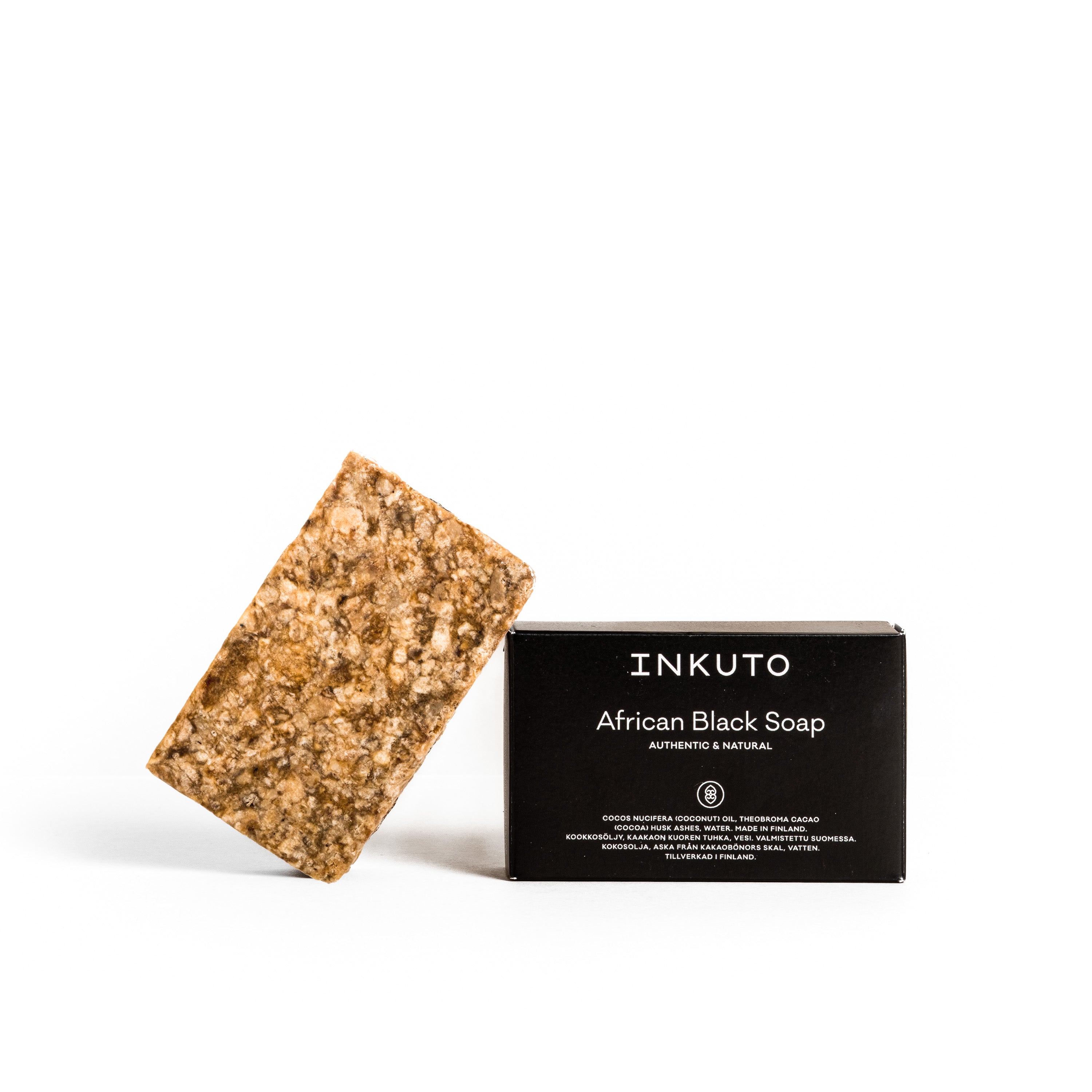
At Inkuto, we craft a wide range of natural soaps — each one with its own story, ingredients, and purpose. Today, we want to shine a spotlight on one of our most beloved: authentic African black soap, made using a traditional recipe from Ghana. We are not here to say that other soaps are bad — we simply want to share what makes this particular soap so special, what goes into it, and why so many people have fallen in love with it as part of their daily routine.
So if you have ever wondered what African black soap actually is, how it compares to a more conventional bar soap, and whether it might be right for you — this article is for you.
🌿 What Is African Black Soap?
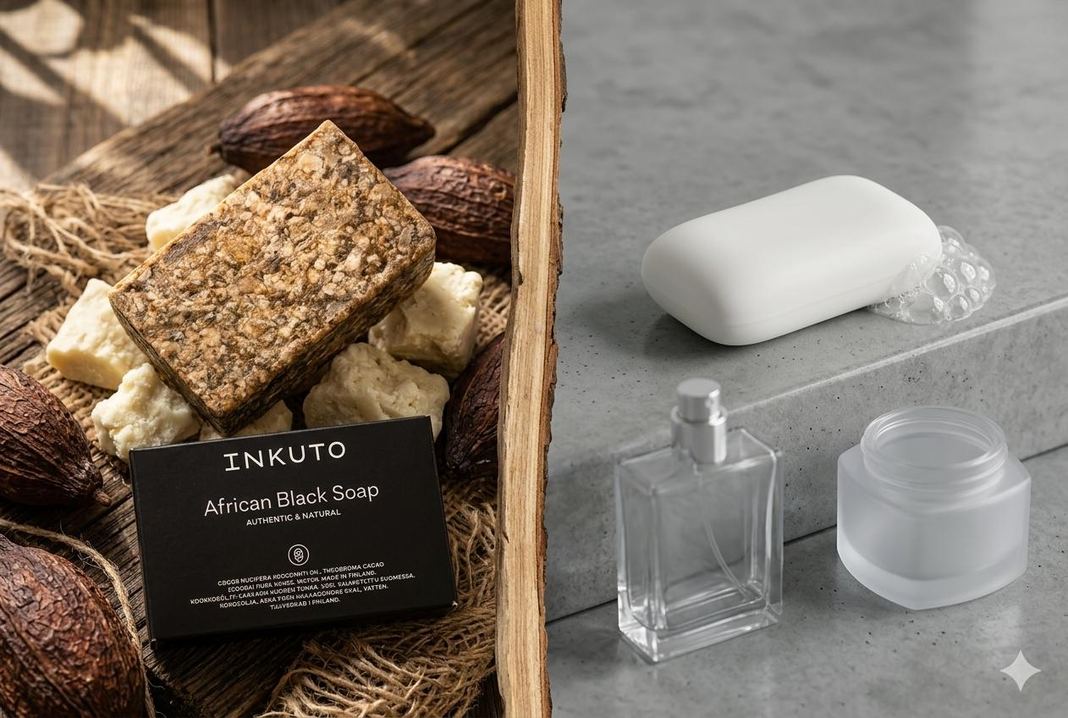
African black soap is a traditional, plant-based cleanser from West Africa. It has been made for centuries using locally sourced, entirely natural ingredients, and the technique has been passed down through generations of women in Ghana and Nigeria.
What sets it apart is its ingredient list. Authentic African black soap contains nothing artificial — no synthetic fragrances, no preservatives, no dyes. Just plants, oils, and time.
-
Cocoa pod ash Adds antioxidant properties and contributes to the soap's characteristic earthy colour.
-
Shea butter Deeply moisturising. Helps leave skin feeling soft and comfortable after cleansing.
-
Coconut oil A natural cleanser that creates a gentle lather and brings antimicrobial properties to the formula.
"Authentic African black soap is soft, slightly crumbly, and brown or grey in colour — a natural result of its handmade production. No two bars are exactly alike."
🆚 African Black Soap vs Conventional Soap at a Glance
- 100% plant-based ingredients
- Naturally fragrance-free
- No preservatives or dyes
- Gentle natural exfoliation
- Moisturising shea butter & oils
- Handmade in small batches
- Face, body, hair & shaving
- Supports Ghanaian cooperatives
- Mix of natural & synthetic ingredients
- Often added fragrance
- Preservatives for shelf stability
- Varies by product
- Moisturisers vary by formula
- Industrial production
- Usually designed for body only
- Depends on brand
🏭 How Is African Black Soap Made?
The production of authentic African black soap is a slow, entirely hand-crafted process. There are no shortcuts — and that is exactly the point. At Inkuto, we use this same traditional method, produced in small batches at our factory in Herttoniemi, Helsinki.
🌿 The Traditional 6-Step Process
-
1☀️ Sun-Drying (3–5 days) Palm leaves and cocoa pods are laid out in the sun to dry completely before burning.
-
2🔥 Controlled Burning The dried plant material is burned at a controlled temperature to produce potassium-rich alkaline ash.
-
3💧 Making Natural Lye The ash is mixed with water and filtered to create a natural lye — the soap's base. No synthetic lye is added.
-
4🧈 Adding Oils & Butter Shea butter and coconut oil are added and combined by hand.
-
5🌀 Hand-Stirring (up to 24 hrs) Stirred continuously by hand — women from cooperatives take turns through the night.
-
6⏳ Curing (2 weeks) Poured into moulds and left to cure for approximately two weeks before it is ready to use.
📊 Full Comparison Table
| Feature | African Black Soap | Conventional Bar Soap |
|---|---|---|
| Ingredient origin | 100% plant-based, natural | Often a mix of natural and synthetic |
| Fragrance | Naturally fragrance-free | Often added fragrance (natural or synthetic) |
| Exfoliation | Gentle natural exfoliation from ash | Varies by product |
| Moisturising | Natural oils and shea butter | Varies — some include moisturisers |
| Preservatives | None needed | Often added for shelf stability |
| Production | Handmade in small batches | Industrial production |
| Multi-use | Face, body, hair, shaving | Usually designed for body |
| Community impact | Supports Ghanaian cooperatives | Depends on the brand |
✨ What African Black Soap Is Known For
*Based on a 2017 survey of 100 black soap users conducted through dermatology clinics. Study source
-
Cleanses without over-drying The natural oils and shea butter help keep skin feeling comfortable and balanced after washing.
-
Naturally antibacterial Studies show it is effective against several common skin bacteria — without added chemical agents.
-
Gently exfoliating The ash content provides a mild natural exfoliation, helping to smooth skin texture over time.
-
Soothing for sensitive skin Free from synthetic fragrances and dyes — among the most common causes of skin sensitivity.
-
Supports an even skin tone Vitamins A and E from natural plant ash and shea butter help reduce the appearance of dark spots over time.
-
Biodegradable and ethical Plant-based, naturally biodegradable, and made in partnership with Ghanaian women's cooperatives.
🧴 Is It Right for Your Skin Type?
A popular choice. Natural antibacterial properties help keep pores clean without harsh chemical additives.
The shea butter and natural oils help maintain moisture. Always follow with your favourite moisturiser.
No artificial fragrances or dyes. Many people with sensitive skin find it much gentler than scented soaps. Patch test first.
Helps balance oil production. The deep cleansing action keeps pores clear without over-drying.
Many customers with these conditions enjoy it — but always consult your dermatologist first, and patch test.
Works beautifully as an everyday cleanser. Natural exfoliation keeps skin clear and bright.
📋 How to Use It
-
Wet your hands and the soap bar Rather than rubbing the bar directly on your skin, work up a lather first in your hands.
-
Create a rich lather in your palms Work the soap between your hands until you have a creamy, foamy lather — this is what you apply.
-
Apply gently in circular motions Massage onto your face or body for 30–90 seconds. No need to scrub.
-
Rinse with lukewarm water Lukewarm is ideal — not too hot, not too cold.
-
Moisturise while skin is still slightly damp This locks in hydration beautifully. Your skin will feel soft and nourished.
How often? For the face, starting with 2–3 times per week is a great approach. For the body, daily use works well for most people.
🌍 Our African Black Soap at Inkuto
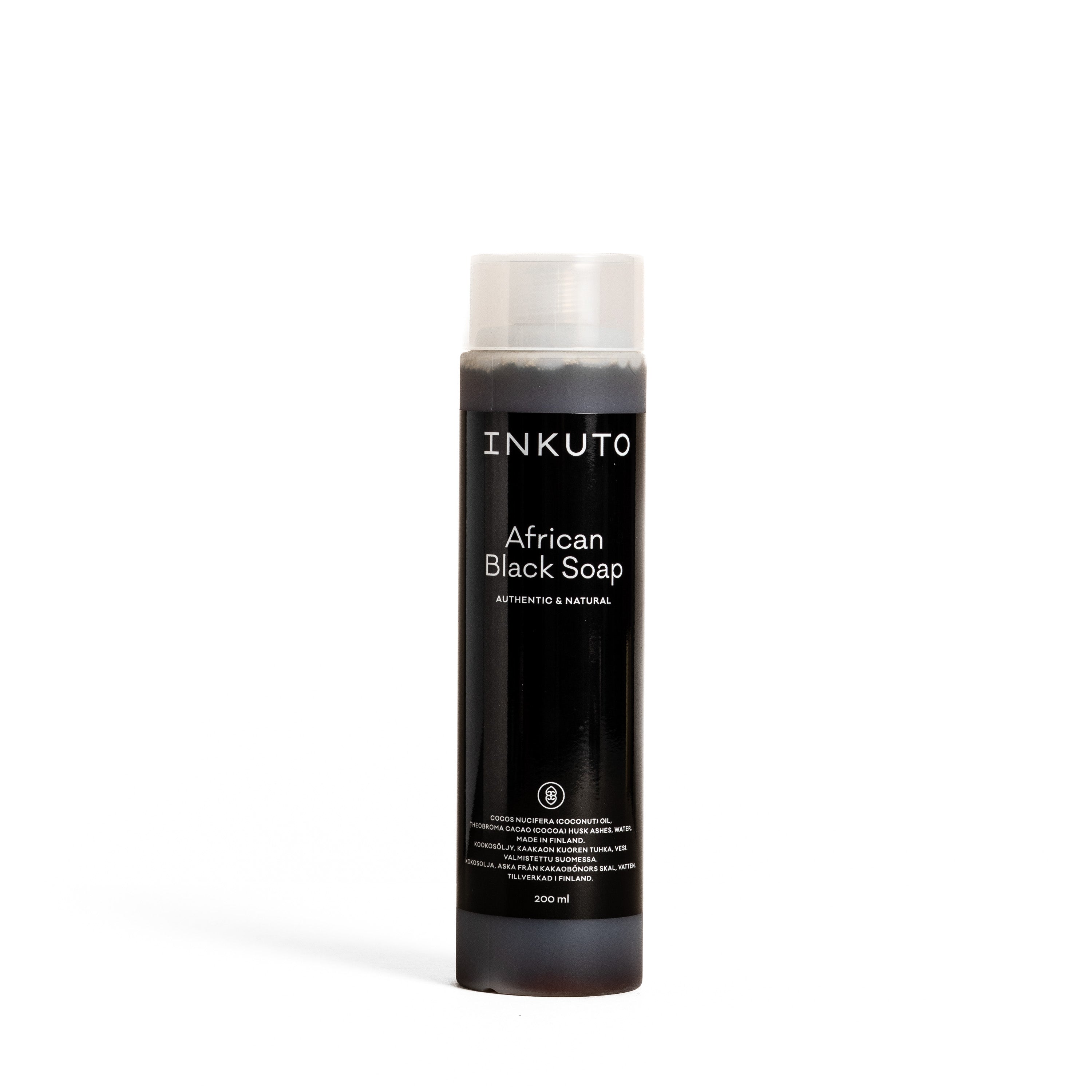
At Inkuto Organics, our African Black Soap is made using a traditional Ghanaian recipe — the same recipe that has been used in West Africa for generations. Every ingredient is sourced directly from women's cooperatives in Ghana through fair-trade partnerships.
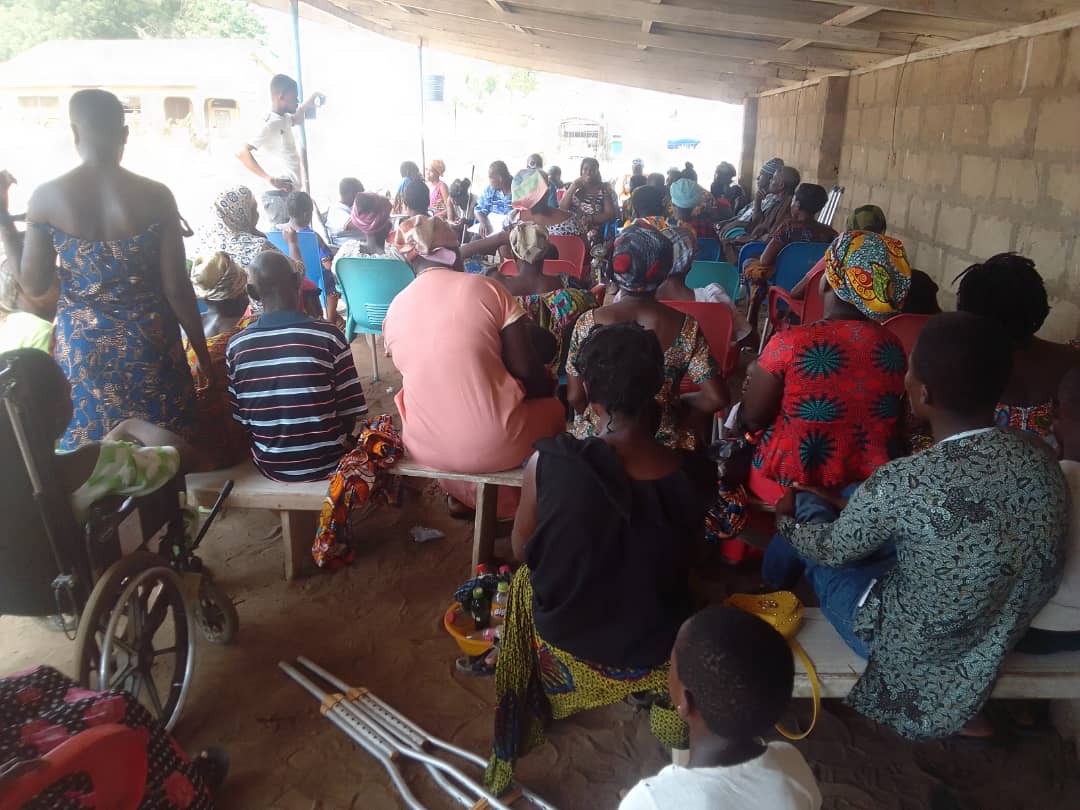
We make our soap in small batches at our factory in Herttoniemi, Helsinki — using the same slow, handcrafted process that has always defined authentic African black soap. And as with every product we make, at least 10% of our profits support the building of an inclusive production facility in southern Ghana for people with disabilities.
"When you hold a bar of our African Black Soap, you're not just holding a cleanser. You're holding centuries of wisdom, the work of Ghanaian women's hands, and a choice to do beauty with purpose." — Edem Agbekey-Taylor, Founder of Inkuto Organics
❓ Frequently Asked Questions
Can I use African black soap every day?
For the body, yes — most people use it daily without any issues. For the face, starting with 2–3 times per week and building up gradually works well for most skin types.
Why might my skin feel a little tight after the first few uses?
This can happen as your skin adjusts to the soap's natural pH. Applying a moisturiser straight after washing resolves this completely for most people. If it continues, simply use the soap a little less frequently.
Can I use it on my hair and scalp?
Yes — many people use African black soap as a weekly clarifying shampoo. Its antifungal properties can help with dandruff and product build-up. Always follow with conditioner.
How do I know if the soap is authentic?
Authentic African black soap is soft, slightly crumbly, and brown or grey in colour. It should have a short, fully plant-based ingredient list. The uneven texture and earthy appearance are signs of genuine handmade production — not flaws.
Is it suitable for children?
Many parents use it for their children — it contains no synthetic fragrances or harsh additives. As with any new product, a patch test first is a sensible step.
🏁 In Summary
African black soap is something genuinely special — a centuries-old tradition, made by hand, from nothing but plants. It is not about being better or worse than other soaps. It is simply a different approach: one rooted in nature, community, and a recipe that has stood the test of time.
If that sounds like something you would like to try, we would love to welcome you to the Inkuto family. We are here to answer any questions along the way.
Study source: Lin A, Nabatian A, Halverstam CP. “Discovering Black Soap: A Survey on the Attitudes and Practices of Black Soap Users.” Journal of Clinical and Aesthetic Dermatology. 2017;10(7):18–22.
Curious to Try?
You can find our African Black Soap at inkuto.com — handmade in Helsinki, free shipping in Finland on orders over €50.
Shop African Black Soap →Fair trade · Handmade · No artificial additives · From €4.95